Key Takeaways
- Camping in Wae Rebo provides breathtaking views from 1,200 meters above sea level in West Manggarai.
- Mbaru Niang houses accommodate six to eight families, offering a unique cultural stay experience.
- Reach Wae Rebo after a challenging 2-3 hour trek from Denge Village.
- Visit in November for the Penti ceremony, celebrating the harvest and Manggarai New Year.
Planning a camping trip to Wae Rebo Village in Bali? This guide provides essential tips on the best spots for night stays in 2027, ensuring your adventure is both enjoyable and well-prepared. Discover the cultural richness, natural beauty, and practical advice for a memorable experience in this unique Indonesian village.
Location and Accessibility
Wae Rebo Village is situated at an elevation of approximately 1,200 meters above sea level in the West Manggarai Regency of East Nusa Tenggara, Indonesia. This remote village is renowned for its traditional Mbaru Niang houses and cultural heritage. Travelers typically start their journey from Labuan Bajo, a popular town on the island of Flores, before embarking on a scenic drive and trek to the village. Labuan Bajo itself is a lively access point to the Komodo National Park, known for its striking beaches and rich marine biodiversity.
To reach Wae Rebo, visitors must first undertake a 5 to 6-hour drive from Labuan Bajo to Denge Village, the nearest accessible point by road. From Denge, the journey continues with a 2 to 3-hour trek through challenging, hilly terrain. This trek offers opportunities to experience the diverse flora and fauna of the region, but it is essential to prepare for the physically demanding nature of the hike. The surrounding landscape is characterized by lush forests and streams, providing a serene backdrop for travelers.
Camping Spots in Wae Rebo
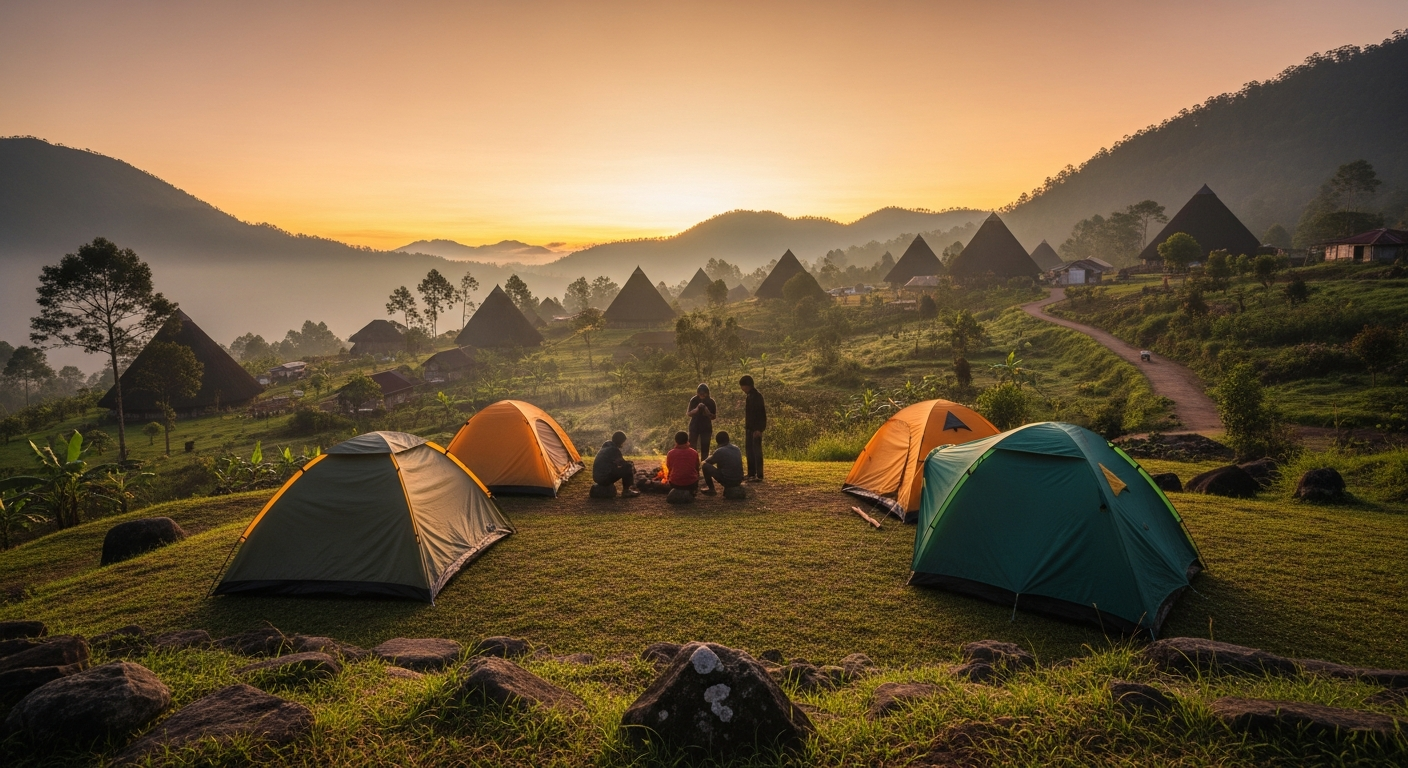
Wae Rebo is not a traditional camping destination as it primarily offers cultural homestays. Nonetheless, the village’s unique environment allows for an extraordinary overnight experience. Visitors can arrange to stay inside the iconic Mbaru Niang houses, which are built in a conical fashion and can accommodate multiple families. Staying in these traditional structures provides insight into the daily lives and customs of the local community. Each house features a central communal area and floors that serve as storage and sleeping quarters.
For those seeking a more conventional camping experience, the area surrounding Wae Rebo provides several spots suitable for pitching tents. It is advisable to consult with local guides or village hosts to identify safe and environmentally responsible locations. Respect for the cultural and natural surroundings is paramount, ensuring minimal impact on the notable environment. The serene setting offers an view of the starry night sky, providing a tranquil and immersive experience.
Best Time to Visit
The best time to visit Wae Rebo Village generally falls between April and November, which constitutes the dry season. During these months, the weather is more predictable, with less rainfall and clearer skies, making the trek to the village more manageable. Additionally, the dry season coincides with the annual Penti ceremony, held every November, offering visitors a chance to witness this lively cultural event that celebrates the harvest and marks the Manggarai New Year. This celebration features traditional dance, music, and rituals that are integral to the community’s spiritual life.
Travelers should avoid the rainy season from December to March. The increased rainfall can make the trek challenging and potentially hazardous due to slippery paths and the possibility of landslides. Proper planning and timing can significantly enhance the overall experience of visiting Wae Rebo. Besides, the misty atmosphere during the rainy season can obscure the remarkable mountain views, which are a highlight during the dry months.
Local Cultural Insights
The inhabitants of Wae Rebo trace their lineage to Minangkabau ancestors from West Sumatra. Their ancestor, Empo Maro, is said to have migrated to Flores generations ago, establishing the cultural roots evident in the village today. This rich cultural heritage is expressed through traditional architecture, customs, and ceremonies. The Minangkabau influence is particularly visible in the matrilineal system practiced by the villagers, where property and family names are passed down through the female line.
Wae Rebo’s cultural practices include communal living within the Mbaru Niang and participation in the Penti ceremony. Visitors have the opportunity to engage with locals, learning about their traditional weaving techniques, storytelling, and the production of crops such as coffee, cinnamon, and vanilla. This cultural immersion offers a deeper understanding of the villagers’ way of life and their connection to their ancestral heritage. The village is also known for its handwoven textiles, which are dyed with natural colors derived from plants.
Practical Travel Considerations
When planning a camping trip to Wae Rebo, it is crucial to consider the logistical and practical aspects. The village is remote, with limited access to modern conveniences, requiring travelers to prepare adequately. Packing essentials includes sturdy trekking gear, warm clothing for cooler nights, and adequate food and water supplies. Mobile phone reception is sparse, so it is advisable to inform someone of your travel plans and expected return date.
Guided tours are highly recommended, as local guides provide valuable insights and ensure a safe journey. Overnight tours, including accommodation, are priced at approximately $375 USD for two days and $484 USD for three days. These tours often include transportation from Labuan Bajo, accommodation in Wae Rebo, meals, and a guided trek, offering a comprehensive experience. Tour operators may also arrange visits to nearby attractions, such as the spider web rice fields of Cancar.
Recognition and Conservation Efforts
Wae Rebo Village has received significant recognition for its cultural and architectural heritage. In 2012, the village was awarded the UNESCO Asia-Pacific Award for Cultural Heritage Conservation. This acknowledgment highlights the efforts to preserve the unique Mbaru Niang architecture and the traditional way of life in Wae Rebo. The award also underscores the importance of maintaining the village’s authenticity in the face of increasing tourism.
The village also received the prestigious Aga Khan Award for Architecture, which further emphasizes the importance of conserving traditional building techniques and cultural practices. Visitors are encouraged to support these conservation efforts by engaging with the local community respectfully and contributing to sustainable tourism practices. Donations and participation in cultural activities directly benefit the community and aid in the upkeep of the village infrastructure.
Flora and Fauna of Wae Rebo
The natural environment surrounding Wae Rebo is rich in biodiversity, offering a home to a variety of flora and fauna. The forests are lush with tropical vegetation, including native orchids and ferns that thrive in the humid climate. Birdwatchers will be delighted by the presence of numerous bird species, including the Flores crow and the helmeted friarbird, endemic to the region.
The area is also home to several species of butterflies and insects, adding lively colors to the natural notable. Small mammals, such as civets and deer, can be spotted by the observant eye. This biodiversity contributes to the ecological significance of the region and underscores the importance of conservation efforts. The local community plays a vital role in protecting these natural resources, balancing their way of life with environmental stewardship.
FAQs
Q? What is the altitude of Wae Rebo Village? A: Wae Rebo Village is located at an altitude of approximately 1,200 meters above sea level in West Manggarai, East Nusa Tenggara, Indonesia.
Q? How long does it take to trek to Wae Rebo from Denge Village? A: The trek from Denge Village to Wae Rebo usually takes about 2 to 3 hours, navigating through hilly and challenging terrain.
Q? What is the cost of an overnight tour to Wae Rebo? A: Overnight tours to Wae Rebo Village, including accommodation, start at approximately $375 USD for a two-day tour and $484 USD for a three-day tour.
For wider arrangements, our partner baliluxurytransport can coordinate end to end.
Planning something bigger across Indonesia? Plan wider itineraries with rajaampatyachtcharter.
Explore all waerebovillage.com options and plan your trip.
Leave a Reply